2024 Addiction Recovery Planner: Your Comprehensive Guide to Healing and Growth
Recovery from addiction is not a single event but a lifelong journey of self-discovery, discipline, and growth. For many, the path forward becomes clearer when they have the right tools to track progress, reflect on challenges, and celebrate milestones. The 2024 Addiction Recovery Planner is designed specifically to support that journey, offering a structured yet flexible framework for anyone committed to sobriety and mental wellness. Whether you are in early recovery, maintaining long-term sobriety, or supporting a loved one, this planner serves as a daily companion that transforms abstract goals into actionable steps.
In this article, we’ll explore the purpose and significance of each component of the planner, how it fits into modern recovery practices, and why the exclusive Canva template and KDP interior make it an essential resource for both personal use and publishing. By the end, you’ll understand how this tool can help you or your audience build a healthier, more mindful life in 2024 and beyond.
Why a Structured Planner Matters in Addiction Recovery
Addiction recovery involves rewiring thought patterns, rebuilding routines, and developing new coping mechanisms. Without a plan, it’s easy to fall back into old habits. A dedicated recovery planner provides accountability, clarity, and continuity. It helps you identify triggers, monitor your emotional state, and maintain focus on therapy goals. The 2024 Addiction Recovery Planner is not just a calendar—it’s a holistic system designed to address the emotional, physical, and spiritual dimensions of healing.
Modern recovery emphasizes self-awareness and habit formation. This planner includes tools like the Trigger Tracker, Mood Tracker, and Habit Tracker, which work together to create a comprehensive picture of your daily life. By recording patterns, you can spot warning signs early and adjust your strategies accordingly. For therapists and recovery coaches, the planner also serves as a structured journal that clients can bring to sessions, enriching the dialogue and accelerating progress.
Inside the 2024 Addiction Recovery Planner: A Complete Breakdown
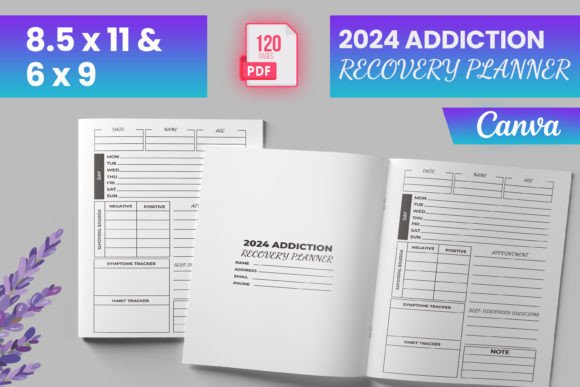
The planner includes 120 total pages in a ready-to-upload PDF format (6x9 and 8.5x11 inches, with bleed), making it ideal for Amazon KDP publishing or personal use. Below is a detailed look at its core components and how each one supports recovery.
1. Calendar and Monthly Planning
The planner begins with a 2024 calendar and a monthly planner spread. These are more than scheduling tools—they help you map out therapy appointments, support group meetings, and personal milestones. The act of planning ahead reinforces commitment and reduces the chaos that often fuels addictive behaviors. You can also note important dates like sobriety anniversaries or check-ins with your sponsor.
2. Trigger Tracker
Identifying triggers is one of the most powerful steps in recovery. The Trigger Tracker allows you to log situations, emotions, or environments that spark cravings. Over time, you’ll recognize patterns—like certain people, times of day, or stressors—that require extra vigilance. This isn’t about avoidance alone; it’s about building awareness and preparing healthier responses.
3. Topics to Discuss with My Therapist
Therapy is most effective when you come prepared. This section provides a dedicated space to jot down Topics to Discuss With My Therapist. Whether it’s a recurring dream, a conflict with a loved one, or a moment of intense craving, having these notes ready ensures you make the most of each session. It also helps track your therapeutic progress over time.
4. Self-Care, Mood, and Habit Trackers
Recovery requires consistent self-care. The Self Care Tracker encourages you to prioritize sleep, nutrition, exercise, and relaxation. The Mood Tracker captures daily emotional states, helping you connect feelings with behaviors. Meanwhile, the Habit Tracker reinforces positive routines—whether it’s meditating, journaling, or attending meetings. Together, these tools build a foundation of stability and self-compassion.
5. Substance Monitor and Weekly Goals
For those in early recovery or managing medication-assisted treatment, the Substance Monitor provides a discrete way to log usage, cravings, and side effects. The Substance Weekly Goals and Weekly Review sections help you set short-term objectives—like reducing a trigger exposure or increasing sober social time—and reflect on what worked. This micro-level accountability is essential for building momentum.
6. Addiction Journal and Prayer Journal
Expressive writing is a proven therapeutic tool. The Addiction Journal gives you space to explore your thoughts, fears, and victories without judgment. For those who incorporate spirituality into recovery, the Prayer Journal allows you to record prayers, meditations, or gratitude lists. Both journals foster introspection and emotional release.
7. Healthy Meal Planner and Exercise Log
Physical health is often neglected during active addiction but is crucial for recovery. The Healthy Meal Planner helps you plan nutritious meals that stabilize blood sugar and improve mood. The Exercise Log encourages regular physical activity, which reduces stress and boosts endorphins. These sections remind us that healing the body supports healing the mind.
8. Reflection, Notes, and Task Reminders
The Reflection Notes pages offer open-ended prompts for deeper thought, while Task Reminders keep you organized. You can note appointments, phone calls, or daily chores. Reducing chaos in your external world makes it easier to focus on internal change.
9. Anxiety and Avoidance Tracking
Anxiety often co-occurs with addiction. The Anxiety and Avoidance tracker helps you log anxious moments and the behaviors you used to cope. This is especially useful for identifying avoidance patterns that may lead to relapse. By naming the fear, you diminish its power.
10. Appointment and Symptoms Tracker
Medical and mental health appointments are non-negotiable in recovery. This section centralizes your schedule and allows you to note symptoms—whether physical or emotional—so you can discuss them with your healthcare provider. Consistency in care is a cornerstone of sustained wellness.
11. Positive Thoughts, Double Focus, and Communicate Your Frustration
Cognitive restructuring is key to breaking negative thought loops. The Positive Thoughts log helps you counteract self-criticism with affirmations. The Double Focus exercise trains you to hold two perspectives at once—like acknowledging pain while also recognizing growth. And the Communicate Your Frustration section provides a structured way to express anger or disappointment without lashing out. These tools improve emotional intelligence and relationships.
12. Mind Sweep, Valentine Acrostic, The Apology, and Stress Worksheet
The Mind Sweep is a brain-dump exercise that clears mental clutter. The Valentine Acrostic is a creative, playful prompt that can be used in therapy or self-reflection. The Apology page guides you through making amends—a critical step in 12-step programs. The Stress Worksheet breaks down stressors into manageable parts, helping you problem-solve rather than feel overwhelmed.
13. Examination of Options, Daily Review, and Medication Tracker
The Examination of Options worksheet encourages you to weigh choices before acting, reducing impulsivity. The Daily Review is a quick end-of-day check-in: what went well, what was hard, what you’re grateful for. The Medication Tracker is vital for anyone on MAT or psychiatric meds, ensuring adherence and helping you spot side effects early.
14. Think About Change, Self-Discovery Questions, and Trigger Worksheet
Change is hard, and it helps to think it through. Think About Change prompts you to consider the costs and benefits of staying the same versus moving forward. The Self-Discovery Questions invite deep reflection: What do I value? What am I afraid of? What brings me joy? The Trigger Worksheet is a deeper dive into specific triggers, helping you create a plan for when they arise.
15. Pros and Cons Analysis
The final worksheet is a classic decision-making tool. Whether you’re debating a relationship change, a move, or a treatment option, writing down the Pros and Cons clarifies your thinking. This is especially useful for those in recovery who struggle with ambivalence.
How the Canva Template and KDP Interior Add Value
What makes this planner truly stand out is its flexibility. The exclusive editable Canva template allows you to customize every page—change fonts, colors, or even add your own prompts. This is invaluable for therapists, recovery coaches, or individuals who want to tailor the planner to their specific program (e.g., 12-step, SMART Recovery, or holistic approaches). You can also add personal branding if you plan to publish or give it as a gift.
The KDP interior is ready to upload with bleed, tested on Amazon’s Kindle Direct Publishing platform to ensure print quality. The files include PNG and JPG formats, an intro page, and a Belongs To page. For entrepreneurs, this means you can publish a professional recovery planner under your own brand with minimal effort. For individual users, it means you can print a clean, durable copy at home or through a service.
Practical Tips for Using the Planner Effectively
- Start small: Don’t try to fill every page on day one. Begin with the Mood Tracker and Daily Review, then add more sections as you build the habit.
- Bring it to therapy: Use the Topics to Discuss and Therapy Goals pages to guide your sessions. Your therapist will appreciate the structure.
- Review weekly: Set aside 10 minutes every Sunday to review your Weekly Review and set goals for the coming week.
- Share with your support network: If you have a sponsor or recovery buddy, consider sharing your Substance Monitor or Habit Tracker—it creates accountability.
- Customize in Canva: Edit the template to match your aesthetic preferences. A planner you enjoy looking at is one you’ll use more often.
Common Misunderstandings About Recovery Planners
Some people worry that a planner will make recovery feel like a chore or a checklist. In reality, the opposite is true. A planner like this one reduces mental load by providing a system for tracking the many facets of recovery. It also serves as a visual record of progress—flipping back through pages can be incredibly motivating. Another misconception is that you need to be “good” at journaling or organizing to use it. Not true. The prompts are simple, and you can use bullet points, doodles, or even one-word answers. There is no wrong way to use it.
Conclusion: A Tool for Lasting Change
The 2024 Addiction Recovery Planner is more than a product—it’s a partner in healing. With its comprehensive set of trackers, journals, and worksheets, it addresses the whole person: mind, body, and spirit. The Canva template makes it adaptable to your unique journey, while the KDP-ready interior opens the door for creators who want to share this resource with others. Whether you are navigating your own recovery or supporting a client, this planner offers the structure and compassion needed to build a new life, one day at a time.
If you’re ready to take the next step, download the exclusive editable 2024 Addiction Recovery Planner today and begin your journey with clarity, intention, and hope.