Minimalist July Birth Flower Tattoo: Integrating Delphinium Designs into Your Creative Workflow
For creators, tattoo artists, KDP publishers, and print-on-demand sellers, a single design can serve multiple roles across an entire project lifecycle. The Minimalist July Birth Flower Tattoo based on the delphinium is one such asset. When paired with a digital printable Delphinium flower coloring book for adult KDP interior, it becomes a scalable resource for everything from client consultations to product launches. Understanding where these designs fit into your planning, execution, and quality control processes helps you work more efficiently and maintain consistency across diverse outputs.
What the Minimalist July Birth Flower Tattoo Design Actually Is
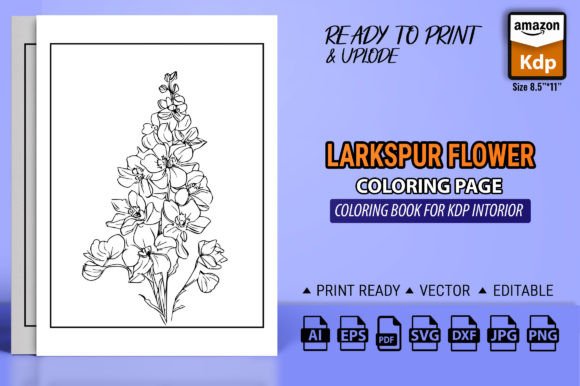
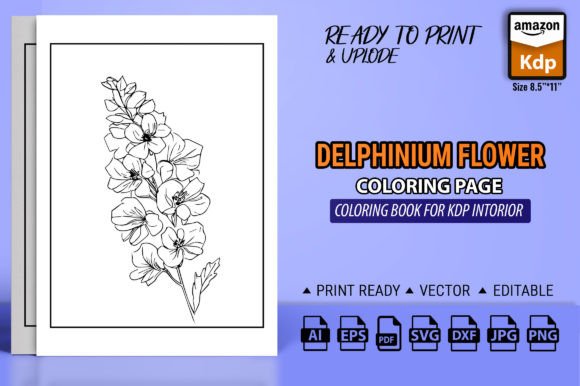
At its core, this is a vector-based delphinium illustration created in Adobe Illustrator, sized at 8.5 × 11 inches. The design follows a minimalist aesthetic, stripping the flower down to clean lines and essential forms. This simplicity is intentional: it makes the artwork adaptable for tattoo stencils, sublimation transfers, greeting cards, fabric prints, and digital coloring pages.
The design comes bundled with a full set of file formats: AI, PDF, EPS, DXF, PNG, SVG, and JPG. For anyone managing multiple production channels, this eliminates the need to convert or re-create assets for different platforms. You can upload the PDF directly to Amazon KDP for the coloring book, use the SVG for cutting machines, or open the AI file in Illustrator to customize the tattoo design for a client.
Before a Project: Planning and Asset Preparation
When you are in the research and ideation phase, having a ready-to-use vector of the July birth flower saves hours of drawing time. Instead of commissioning original botanical art, you can source this delphinium design and incorporate it into mood boards, client proposals, or product mockups. Because the file is vector-based, you can scale it without losing resolution, which is critical when you are testing layout options for different products.
During the Execution Phase: Customization and Production
During active production, the minimalist nature of the design allows for rapid modification. Open the AI or EPS file in Illustrator and adjust line weights, swap colors, or add text elements. For example, if a client wants a tattoo with a specific stem curve or a smaller bloom, you can edit the vector paths directly. For print-on-demand items, you can duplicate the flower motif across a pillow pattern or a mug template while maintaining proportional consistency. The included DXF format also lets you import the design into laser engraving or routing software for physical goods like wooden signs or acrylic ornaments.
After Launch: Repurposing and Quality Control
Once a project goes live, the same design can be repurposed for complementary products. The printable delphinium coloring book, for instance, uses the flower line art as a meditation activity for adults. You can also use the PNG files as social media teasers, the JPG for printed proof sheets, and the SVG for vinyl decals. Over time, maintaining a single source of truth for the artwork reduces the risk of version confusion. When you need to update a color palette or refine a detail, you edit one master file and regenerate all outputs.
For Tattoo Artists and Clients
A minimalist July birth flower tattoo is a common request, especially for clients who want a subtle nod to their birth month. Instead of sketching from scratch each time, you can print the stencil directly from the PDF or trace the vector in your tattoo design software. The line quality of a well-made vector ensures clean, consistent stencils. If a client wants to combine the delphinium with other elements, you can import the SVG into your design app and layer it with complementary florals or geometric shapes.
For KDP Publishers and Content Creators
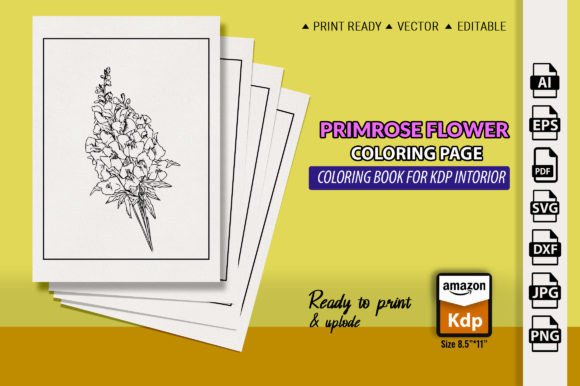
The digital printable delphinium coloring book is a straightforward product to publish on Amazon KDP. Because the file is already formatted at 8.5 × 11 inches, you can upload the PDF without additional layout work. However, the same vector can be used to create a series of related low-content books: a dot grid journal with a delphinium cover, a notebook with the flower on every page as a faint watermark, or a gratitude journal with floral accents. The AI file lets you reposition the flower, change its size, or add repeating patterns for interior pages.
For Small Business Owners and Crafters
If you sell on Etsy or at craft fairs, the delphinium design can be applied to multiple products without re-licensing or re-drawing. Use it for sublimation on t-shirts, pillowcases, and tote bags. For mugs, you can place a single bloom or create a wrap-around pattern. The DXF format is especially useful for die-cutting machines, allowing you to cut vinyl stickers or heat transfer material with precision. Consistent branding across your product line builds recognition, and having one vector source keeps your color and line style uniform.
Working with the File Formats: A Practical Breakdown
The ZIP file includes seven formats, each suited to a specific stage of your process.
- AI and EPS — Use these for editing in vector software. This is where you customize the design, adjust colors, or combine elements. Because these are native Adobe formats, you retain full editability.
- PDF — Ideal for direct upload to KDP or for sending to clients for approval. It preserves the layout and can be printed at high quality.
- SVG — Best for web use, cutting machines, and apps that support scalable vector graphics. You can also import SVGs into presentation software or design tools like Canva.
- DXF — This format is essential for laser cutting, CNC routing, and some embroidery digitizing programs. It allows the design to be translated into physical cuts or engraved lines.
- PNG — Use for mockups, social media posts, and digital previews. The transparent background makes it easy to place the flower on different colored backgrounds.
- JPG — Keep this for quick proofs, printable flyers, or any situation where a straightforward raster image is acceptable.
By maintaining the full set, you avoid the bottleneck of format conversion errors. When a client asks for a specific file type, you already have it ready.
Organize Your Digital Assets
Store the master AI file in a project folder with a clear naming convention, such as “Delphinium_Tattoo_Design_v1.” Keep subfolders for each output format. This structure helps when you revisit the design months later for a new product.
Test Before Full Production
Before printing 50 mugs or uploading a coloring book to KDP, run a small proof. Use the PNG or JPG to print a single sample on your sublimation paper or home printer. Check that the lines transfer cleanly and that the scale works for the product size. For tattoo stencils, do a test transfer on practice skin to ensure the stencil is readable.
Establish a Color Palette Early
The minimalist July birth flower tattoo works best with limited colors. Decide on two or three hex values for your brand or client project, then apply them to the vector. You can save a color swatch in Illustrator for consistency across all products. This is especially helpful if you plan to create a matching coloring book cover, stickers, and fabric prints.
The Delphinium Coloring Book as a Companion Product
The digital printable Delphinium flower coloring book for adult KDP interior is not a separate project. It flows naturally from the same vector design. Because the tattoo art is minimalist, it easily converts into a coloring page. You can use the same AI file, remove the color, and adjust the line thickness if needed. The 8.5 × 11 inch format is standard for coloring books, so no extra scaling is required.
For adult audiences, the delphinium motif offers a calming, nature-focused activity. If you are already publishing low-content or activity books, adding a coloring book with the same birth flower design strengthens your thematic catalog. Consider bundling the tattoo design as a bonus inside the coloring book, such as a free stencil page or a traceable pattern, to increase perceived value.
Observations on Long-Term Use and Scalability
Working with a single vector asset across multiple product lines reduces creative fatigue and ensures your brand visual remains cohesive. Over time, you can build a library of birth flower designs for each month and apply the same workflow. The July delphinium becomes one module in a repeatable system.
Quality control is easier when you have one master file. When you discover a tiny path error or want to update the line weight, you fix it once and regenerate the outputs. This prevents the drift that happens when different team members export separate versions for different products.
For entrepreneurs scaling their KDP catalog, the ability to upload a pre-formatted PDF directly to Amazon removes a major step. Instead of spending a day designing a new interior for each book, you can adapt the existing delphinium coloring book into a new cover and list it quickly. The same logic applies to print-on-demand stores: a single design can fill multiple slots in your shop without requiring new artwork.
Finally, consider the end user. Whether someone is getting a minimalist July birth flower tattoo or coloring a delphinium page to relax, they are engaging with the same clean aesthetic. That consistency builds trust in your work as a designer or publisher. By integrating the design into your planning, execution, and quality review stages, you move faster, produce fewer errors, and maintain a professional standard across all outputs.